Tuesday, June 27, 2017

Avenue of Mysteries by John Irving

Avenue of MysteriesAvenue of Mysteries by John Irving
My rating: 4 of 5 stars

Image that T.S. Garp and Owen Meany were brother and sister. Next imagine that they started life as poor Mexican dump kids. (Is there any other kind, but poor?) And rather than calling themselves Garp and Owen their new names are now Juan Diego and Lope.

Now imagine that Juan Diego is an author of books that sometimes appear to have much in common with some of John Irving’s more famous, and infamous, works. But don’t read too much into that similarity because as Juan Diego often protests, his books are not autobiographical. Although, I do have a suspicion that he does protest too much.

“Avenue of Mysteries” contains miracles or possible miracles. There is religious ambiguity as well as sexual ambiguity. There are several John Irving style deaths, meaning comical, tragic and untimely. There are ghosts, or at least potential ghosts, or at least we hope they really are ghosts. They might be.

Juan Diego’s life plays in the present day, on a pilgrimage of sorts, to the Philippines where a somewhat obnoxious former student serves as his host. It’s is on this trip that he meets two women who may or may not be mother and daughter, who may or may not even be flesh and blood, at least not of the type we are used to. Juan Diego's past returns to visit him often, in his dreams and in his imagination.

If you have read John Irving in the past and you liked his work, I think you will really appreciate “Avenue of Mysteries”. It is not a re-tread of past glories, but a re-imagining of many. There is much that is familiar and, perhaps, I got too caught up in the “That’s from…” game. However, this doesn not feel like re-hashed leftovers—OK, maybe a little bit—although maybe more like a fresh serving of a favorite dish, with just enough that is new to keep it interesting.

I think the best books are the ones where the characters become more than props in an opera and, for whatever reason, whether you want them dead or alive, you give a damn. In that way I think this book is a grand success.


View all my reviews

Wednesday, May 24, 2017

Rogue Lawyer by John Grisham

Rogue LawyerRogue Lawyer by John Grisham
My rating: 3 of 5 stars

(Audio version)
This is a bona-fide john Grisham novel, so naturally the central character is a lawyer in a mid-size southern town.
Sebastian Rudd doesn't bother with the ordinary cases. His clients are the type of people who are just shy of beyond a reasonable doubt guilty. He drives around town in his mobile office, a black bullet-proof van.
Unlike most Grisham novels, at least the ones that I have read, "Rogue Lawyer" is not driven by a single tale of moral dilemma. Instead, several key episodes in the life of Sebastian Rudd are interwoven into a well-paced tale.

View all my reviews

The Girl on the Train by Paula Hawkins

The Girl on the TrainThe Girl on the Train by Paula Hawkins
My rating: 4 of 5 stars

(audio version) Great use of POV.
Rachel, Anna, Megan, Tom and Scott. One is an alcoholic. One, well actually three, are cheaters. One, maybe two is abusive. One keeps secrets. One is a liar. One is a very good liar. Two are trying to regain control of their lives. Three think they are in control of their lives. They are all wrong. Four don't realize that they are in danger. Two will die. One is a killer. And these are their good traits.

The story is told from the point of view of Rachel, Anna, and Megan. And as is usually the case, people observing the same event often perceive things differently. Some books use this POV gimmick to have each character tell their version of events. "The Girl on the Train" avoids that tedium by keeping the narrative moving forward regardless of whose eyes we are looking through.

View all my reviews

Saturday, February 4, 2017

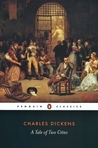
A Tale of Two Cities by Charles Dickens

A Tale of Two CitiesA Tale of Two Cities by Charles Dickens
My rating: 4 of 5 stars

After approximately 1000 words, I was almost to the point where enough is enough. The dialogue is stilted; the characters, like the actors in a high school play, seem overly mannered. However, read on and the world takes shape, events become important and the high-school players turn into real people, living real lives, in troubled times.

Unlike most modern novels which attempt to live by the rule that you must grab the reader in the first page or two “A Tale of Two Cities” requires a small act of faith by the reader. It’s a very small investment in stage-setting that pays out big in the end. I knew there had to be a good reason this is considered by many to be a timeless classic.

View all my reviews

Wednesday, December 21, 2016

Sweetland

SweetlandSweetland by Michael Crummey
My rating: 3 of 5 stars

[Audio Version] I picked up “Sweetland” hoping that it might be the Canadian equivalent of Steinbeck’s ‘Sweet Thursday”. I’ll state here that there is a real possibility that this unrealized expectation may have affected my ability to appreciate the first couple of chapters but I don’t think so. I’ll describe those chapters as plodding but necessary in order to create a solid foundation for what followed.

What followed was the unfolding of the life of 70-year old, Moses Sweetwater. While adopting a bit of the persona of a grumpy-old-man Moses is neither an evil man running from a long-history of mis-deeds nor a super-hero saint. He just is. Life happens and he regularly, dutifully confronts occurrences as needs be, without excuses and without an expectation of pity or accolades for any of his actions.

Now, if that sounds dull, blame this reviewer. “Sweetland” succeeds in bringing Moses Sweetland to life. Once that happens and the reader (or listener) comes to know and empathize with the characters, then outcomes matter. And that is what makes for a rewarding reading experience.


View all my reviews

Wednesday, November 30, 2016

New Earth

New EarthNew Earth by Ben Bova
My rating: 2 of 5 stars

[Audio Version]
Imagine a future where climate change is threatening the human population. Imagine the good fortune of finding an earth-like planet waiting to be explored and possibly colonized. Unfortunately, it will take your team 80 years to get there, 8 years before earth receives their first transmissions and another 80 before they get home. So far, so good. Except, I guess things are so bad on earth that it’s unthinkable to send their best. So somehow they manage to put together a team consisting of the dumbest experts imaginable.

Had I been reading this book either in a traditional format or on a Kindle I think I might have put it down and continued on to something else after a chapter or two. It’s possible that because an actor was reading to me, and I was stuck in traffic anyway, that I was a little more patient in allowing this story to play out than was warranted.

So, without going into spoilers, how can I be so down on the book and yet listen through to the end? I can’t say. It may be that this book was the sci-fi novel equivalent of an episode of Gilligan’s Island. You know what happens in the end. You know that the castaways will do something petty and stupid to bring about that end. Yet, because you like some of the actors you stick around and watch the inevitable take excruciatingly long to happen.

I’ve not read Ben Bova before. It’s my understanding that he is a well-respected author and that this may not represent his best work. Oh well, while I’m not about to rush out looking for another Bova novel to read, I won’t let this one stop me from picking up another should it appear that it might interest me.


View all my reviews

Tuesday, October 25, 2016

The People in the Trees

The People in the TreesThe People in the Trees by Hanya Yanagihara
My rating: 3 of 5 stars

This is one tough book to review.

I almost gave up early on. Basically this is the fictional autobiography of an especially unlikable narcissist and probably sociopath who's only redeemable characteristic is that be is a brilliant, or maybe just extremely lucky, medical researcher who goes by the name of Norton. I may have quit the book early on except that Norton's rat-a-tat-tat narration, somewhat like Oskar in "The Tin Drum", kept me intrigued. It wasn't that I particularly liked the experience, but the book seemed in a hurry to get somewhere and I wanted to get there too.

That somewhere actually turned out to be a lost civilization known as the "Dreamers", the people in the trees. They represent an amazing discovery with a twist that yada-yada could change the world. As events proceed Norton, when he's not behaving like a petulant child appears, almost appears human. Will he ever atone for his sins? Maybe. He rescues (adopts) children from the land he helped destroy. Guilt?

--Spoiler--

Nope, As it turns out Norton is even worse than I'd imagined. This brought up the question: What was I reading and why?

If execution is everything then this novel is worthy of three stars--probably more. Yet I can't recommend it. Maybe as an expose of the mind of a sociopath it has merit--maybe. As for me, I feel as though I was led through a dark and dreary labyrinth. There were hints of light along the way, but not much. I think there was a Catholic moment that may have thrown me off: penance, forgiveness, and time spent in Purgatory. But, after turning the final corner it turn out the glimmer of light was actually a pile of shit! This book is definitely not for everybody. As it turns out it wasn't even for me. Yanagihara may someday be considered a great author, but this is not the book that will have me looking up whatever other work she may have out there.


View all my reviews

Sunday, September 18, 2016

"Tunnel in the Sky" by Robert A. Heinlein

Tunnel in the SkyTunnel in the Sky by Robert A. Heinlein
My rating: 3 of 5 stars

Going into this book I knew the author and the title and little more.

I wasn’t surprised in the beginning when it appeared as though this might go all space wizardry with worm-hole like transport to distant planets. However the story didn’t take the Tom Swift route. It turned slightly domestic as it followed the main protagonist, a teenage student named Rod Walker, from lollygagging about, to his trip through a tunnel from the east coast to his home in the southwest, dinner with his parents and sister, his school, and finally the survival assignment that would set the main stage for the novel; a weekend on an unexplored but hopefully habitable planet.

Rod is dropped off, as are numerous others, for his weekend of survival. However catastrophe leaves them stranded on the planet and soon Rod does begin encountering fellow students. His first conscious encounter, after having been mugged, is with Jack. Jack is actually the female Jackie but, it appears due to her competence, Rod never actually catches on that she is not a male. It is another student who first makes this observation.

Eventually the colony attracts others. It is here that the story takes a turn that reminded me of Lord of the Flies. However, in Tunnel in the Sky the stranded survivors attempt to avoid any sort of regression by recreating the civilization that they left behind. They form a governmental body with marriage certificates, and stabs at democracy.

The book was written in the mid-fifties and it’s hard to totally ignore the times from which it came. The women are on the cutting edge of equality when survival is questionable but expected to fall back into the traditional roles of domesticity as conditions allow; skirts for formal square dancing and all. This isn’t a criticism; just interesting. At the time it was probably a bold step forward; today it reads like one foot stuck firmly in the door.

I did have a problem with the main character. It may be a 50’s thing but by the end of the story, in spite of being portrayed as a savior of the community, I think he’s evolved into a whiney, who- gives-a-damn hindrance to the colony. For reasons that aren’t logical he decides against his own proposal of moving to a safer, defensible area. When rescue does happen he acts sullen and spoiled, like a dictator who enjoys the illusion that he was overwhelmingly elected.

In the end this is a well-written, sometimes exasperating book. The characters are observed and recorded but their motivations weren’t , at least to me, very clear. Lately, I find , that I prefer books that are more involving yet able to avoid crossing the line into navel gazing. Three stars seem fair. This is a good book, but not one that I’ll be thinking about much after this review..


View all my reviews

"The Thousand Autumns of Jacob De Zoet" by David Mitchell

The Thousand Autumns of Jacob de ZoetThe Thousand Autumns of Jacob de Zoet by David Mitchell
My rating: 4 of 5 stars

Judge a book by its cover and you might think that “The Thousand Autumns of Jacob De Zoet” is simply the story of Jacob De Zoet, a clerk for the Dutch East Indies Company who arrived in Dejimi, a port off the coast of Japan in 1799. But this book is a thousand times more ambitious than simply the story of an honest clerk. It’s about everybody he meets, and the culture, and the crime, customs, traditions unrequited love, and forbidden practices. De Zoet is not some superhero who marches into all these situations and saves the day. In some cases his influence barely rates a ripple; in others he remains forever unaware.

The story is broken up into sections that sometimes feature a cast of characters within only the slightest connection to De Zoet. Yet, De Zoet never feels far from the action even when separated by time and distance.


****Possible Spoiler***


I clicked on the 4-start rating and immediately felt as though I had clicked one-star too few. This is easily a 5-start book—almost.

While reading I did get caught up in the life of De Zoet; what he did, what he might do, what he should do. The novel is certainly involving on that level. Maybe my disappointments with De Zoet are actually my own. After nearly 20 years living off the coast of Japan he remains unavoidably affected yet essentially unchanged. When he is forced to leave, leaving his son behind, one hopes for a desperate action, even if knowing it would be doomed to failure. No desperate action happens and De Zoet returns “home” where he is celebrated as a wartime hero. The extraordinary life that De Zoet’s has lived seems to have had little effect on him. For better or worse he lives out the remainder of his days as the same humble, honest, hardworking and loyal man that he sought to be from the beginning.

A great novel, a truly great novel, but I think I’ll leave the 4-star rating—at least for now. The book is put away, yet the story continues to play in my head. What was, what could have been—but wait! It’s only fiction. Probably the highest 4-star rating I’ll ever leave.


View all my reviews

Tuesday, June 7, 2016

Ghostwritten by David Mitchell

GhostwrittenGhostwritten by David Mitchell
My rating: 4 of 5 stars

A 1-Star Review of a 5-Star Novel.

Attempting to even write an adequate review of a novel as grandiose as Ghostwritten is intimidating. It can lead you to drop pretentious words like grandiose into a sub one thousand word review in hope of compensating for a paucity of proper words. I’m primed for a great review but as a word-smith I'm feeling overwhelmed by the task at hand. Prepare for disappointment.

Unfortunately, I have to begin by admitting to a cheat. I did not actually read “Ghostwritten”. I listened to it as I drove to and from the office every day. The experience left me undecided as to whether or not being unable to flip back a page or two is truly a disadvantage. There were several occasions where I played a disk twice. Normally, I would not want to hear the same passages read back to me so soon after having heard them the first time. But I found that a second listen allowed for a greater appreciation for what I had heard. It allowed me to pick up subtleties that I had missed.

Back to point, on the surface “Ghostwritten” may appear as a disjointed collection of short stories. That’s primarily because it is. Yet each tale is woven into the others in ways that are not immediately obvious. Mitchell manages to create a full world where the parts are as inextricably connected as they are disjointed. Separate yet together, playing upon and dependent upon one another.


In the end the magic of “Ghostwritten” is not about getting caught up in the adventures of any particular protagonist. It is about getting caught up in a world where the connections that bind us are made real while the barriers that would divide us are swept away.

View all my reviews

Sunday, June 28, 2015

Closing Out on a Dead Horse

Only occasionally is Stephen King my favorite fiction author. However, when it comes to writing or pontificating about writing he is never anything less than exceptional.  The quotes, and there are many, are always memorable. (But, of course they’re memorable, or why else would I call them “The quotes”?) One of my favorites is, “If you don’t have time to read, then you don’t have time to write.” I can’t say for sure what he meant by that, but I do know that writing is communication and that reading helps you better understand the craft of communication.

Being tone-deaf allows me the privilege of thinking of myself as something of a musician. Being a  hapless musician the best I can hope for is to accidentally stumble across what real musicians know as the perfect sound. It is a sound so pure that it can be felt by the musician and the audience alike. It owns all who are able to hear it. It evokes a feeling that you want to hold on to for as long as you can.  (This can sometimes result in over-indulgent guitar solos by hack bands. The writers analogy, I believe, would be purple prose.)

With my writing, my purpose is not too dissimilar from that of the musician. I’m attempting to capture that perfect mix of words that will create a moment where the reader can actually feel beyond the words. My hope is to elicit a visceral response equivalent to that of the perfect sound. I want to awaken a buried memory in the service of whatever tale it is that I am trying to tell. And I’m hoping that I can create the emotional connection within the reader that will transport them to someplace that they want to hold on to for as long as they possibly can.

This brings me back to the beginning and the Stephen King quote. In order to learn the craft we must, of course, write, write, write, but we also need to read, read, read in order to understand the many nuances of the craft that we hope to master. (With any luck I’ll improve as a writer and look back on these words and want to puke; I’m hoping that day won’t be tomorrow.)  I’ll close out this blog with some observations comments regarding my two most recently read books. Although they are the “Dead Horse” of the title that is in no way a meant as a comment regarding either of them.  These books have had varying degrees of success in evoking visceral responses in me. I almost hated one and had to struggle to complete it. I loved the other. I enthusiastically suggest them both to writers interested in mastering the craft.

Ray Bradbury’s “Something Wicked This Way Comes” was really difficult for me to get through. The term “purple prose” was probably invented for this book.  Bradbury spends a lot of words fondly reconstructing various moments of what must have been his Norman Rockwell-like youth. But, as much as I hated these diversions from anything resembling a plot, many of these isolated moments worked. They felt as vivid as my own dreams. I felt what it was like to be that kid, in that tree, at that moment in time. The touch, smell and visuals all felt right, but just like a real dream they didn’t hold together for long and quickly dissolved into nothingness. Many times I felt as though the plot, such as it was, was held together more by my determination to finish this book than anything written. Still, all of the individual poetic moments in this book both inspired and cautioned my own ambitions. The inspiration was in finding the courage to write to sentimental excess in order to reveal the greater meaning in the everyday occurrences  that we often take for granted; the cautionary note is the knowledge that sometimes a thesaurus can be a really bad thing to have at your side.

The second book I’ll mention is David Mitchell’s “Cloud Atlas”. In its telling “Cloud Atlas” is more conventional than “Something Wicked…” However, instead of getting caught up in small moments the story weaves a much larger landscape that is virtually impossible to describe as it spans past and future generations with only the hint of a link. Unlike “The DaVinci Code” which tells a very linear tale, and is a good read in spite of all the cheap-shots its endured, the impact of “Cloud Atlas” is received only its conclusion and as the sum of all its parts hit you face on. It is the perfect note, the one that many musicians and writers have been chasing after for hundreds of years, seldom with only fleeting success. And that is what I, as a writer, try – so far not to my satisfaction – to do.

Sunday, May 17, 2015

Something Wicked

Finally, after many months of avoidance activities, I've finished reading the classic Ray Bradbury novel, "Something Wicked This Way Comes".

This review has been almost as difficult to write as the book was to read. My feelings towards this book constantly vacillated from wanting to toss it on the garbage heap to  marveling at the poetry of so many of its truly great and beautifully written passages. As a reader there were many times were I was drawn in by the prose. At times it almost felt as though I was actually remembering the sights, sounds, smells and flavors of moments that I had experienced. But inevitably, the crash to reality would come as the sentimental passages, seemingly supplanting any actual story, were drawn out too thin. As the novel wore on, regardless of how poetic and brilliantly written many of passages were, I found myself growing weary for what felt like an endless run of overly romanticized, ultra-nostalgic moments.

I'm sure there is a technical term, other than tedious, to describe the running together of strings of adjectives and/or adverbs to describe a multiplicity of actions that most authors would relegate to a simple sentence. On many occasions Bradbury - sometimes brilliantly - wanders where others fear to tread. In describing an evil character who is simply waiting for his moment, Bradbury writes:

“so he scuttered, crept, scurried, stalked tip-toed, wafted, stood immensely still among the primates, the Egyptian monuments to bestial gods, brushed back histories if dead Africa, stayed awhile in Asia, then sauntered on to newer lands.”

While there were occasions where this method of writing works well, on more than a few occasions it falls flat and comes off sounding as though he simply ripped a page from a thesaurus.

There are too many moments where the story takes a back seat to prolonged periods of misty-eyed reminiscing. It isn't until halfway through the book that the there appears to be any interest in developing an actual plot. To be fair there are genuine moments of fear and apprehension, but they're not sustained and instead are buried under more reminiscing. From beginning to end the plot remains vague. It is unclear what motivates the villains. In fact it is unclear if the villains are legitimately evil or victims themselves. 

The ending is too convenient. It is too pollyannish and meaningless to be satisfying. I will note that the books was published in 1962, although I'm not really sure that that should change anything. It may be that the book's format was daring for the time.

In the end, when it comes to recommending this book, I remain conflicted. I felt that, from a reader's perspective, there was a lack of involvement with either plot or characters. Because of my inability to develop any connection to the characters and situations, and because of the frequent forays into the poetic jungle, I struggled to complete this book. Yet, in-between the too many large sugary dollops of overly sentimental nostalgia it does contain some of the best and most poetic passages that I’ve ever read. For that reason alone it may be best to ignore my review and read this book for yourself. But don’t say I didn’t warn you.

Monday, February 2, 2015

The Greatest of Them All

“The Greatest of Them All” That title was not what it seems. It was cynicism and sarcasm mixed with spittle as I prepared to dismantle one of the most revered writers of our time. Sorry, I’ve read him but I just don’t get him. I drown in his pages of purple prose long before a point has been made or a real event occurs. But as I wrote my carefully crafted take-down I began to wonder what’s my point? Insane jealousy? You’ve never heard of me but I guarantee you’ve heard of him. Nevertheless I did eventually finish my essay, I mean blog entry. Unlike most of my other efforts, this one was brilliant! Yet, I realized that it did not represent what I hope to accomplish with the word craft. (No, the author I was referring to was not Lovecraft!)

In my last blog entry I heaped praise on a story that I found moving, profound, just a little bit difficult, and well worth the effort. Now, should you take my advice and read that particular story you may think that it sucks - differences of opinion do happen. But, at least I didn’t waste your time by bitching about some writer who pisses me off, or simply bores me. I tried to introduce you to something good. For both of you who read my blog, there is the possibility that I’ve introduced at least one of you to greatness.

So here I was, having deleted my best work to date, with a blank page. I began to ponder: Why do I bother writing anyway? After several false starts, and the inevitable deletions I decided that, at least for tonight, I would give up on that particular question. However, I can say that my intention in writing is that my writing be a positive experience. Not necessarily all laughter and giggles, maybe something that tears you apart, but in a way that allows you to empathize and relate with the story and with the characters.

It occurs to me now that there is a mantra stating that you write for yourself. Well, OK, of course you write for yourself, but there would be no need to bother with all this typing if I didn’t want somebody else to read it too. So, write for myself - yeah, yeah, of course – but I also write to create something of worth; something worth sharing. Sharing because I’ve been constructing my alternate reality in an effort to explain - everything and anything - to me - and to you. 

They - and as had been established many times, we have no idea who they is - say that a picture is worth a thousand words. I’ll leave that unchallenged as truth. But an idea or emotion, especially one that attempts to encapsulate the many thousands of contradictions that are inherent in any worthy notion, easily requires tens of thousands of words. (Or a few carefully bent notes from B.B. King, but I’ll leave that discussion for another day.)